
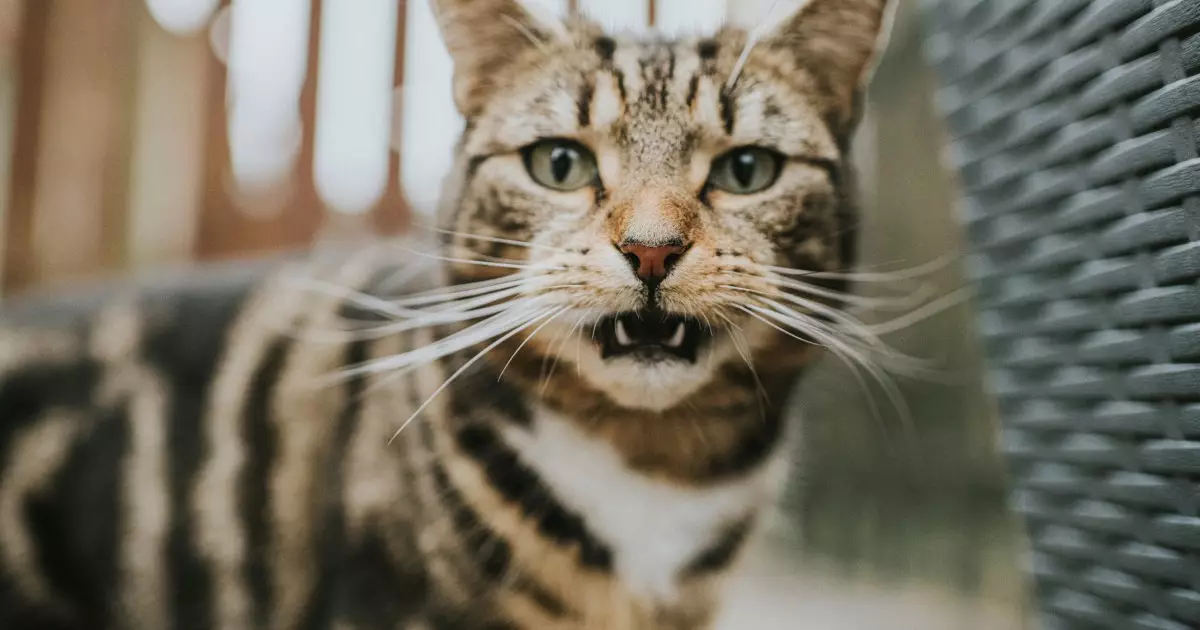
Cats have long been misunderstood creatures, often dismissed as aloof or emotionally detached compared to their canine counterparts. However, recent research sheds light on the intricate and often unrecognized emotional lives of these enigmatic animals. A study published in the Behavioral Processes journal highlights that cats possess nearly 300 distinct facial expressions, a revelation that challenges common perceptions and indicates a much richer tapestry of communication than previously acknowledged.
Research conducted by Lauren Scott at the University of Kansas Medical Center involved an extensive year-long observation of 53 domestic shorthair cats within a cat café in Los Angeles. The study aimed to catalog the subtleties of feline communication through facial expressions—an endeavor that revealed an astonishing 276 unique expressions. Scott’s partnership with Brittany N. Florkiewicz, an evolutionary psychologist, embraced a meticulous analysis of these cats, leading to the discovery of their diverse range of 26 facial movements.
The variety of movements noted encompassed everything from changes in ear positioning to subtle blinks and whisker movements. This is astonishing when juxtaposed with humans, who possess around 44 facial movements, and dogs, which showcase only 27. Such findings underscore the socio-emotional complexity of cats and suggest their form of communication is just as nuanced as, if not more than, that of other pets.
Within the multitude of facial expressions documented in the study, it was categorized that around 45% indicated a friendly disposition, while 37% signaled aggression, and the remainder were classified as ambiguous. This classification underscores a fundamental misunderstanding: while cats may appear standoffish, they exhibit a range of emotional cues indicative of their feelings and intentions. Florkiewicz emphasized that examining a cat’s ears, eyes, and whiskers can yield critical insights into their emotional state, revealing potential friendliness or impending aggression.
The implication of such findings could be monumental in fostering better interactions between cats and their human companions. Understanding these emotional signals not only aids in recognizing a cat’s mood but also enhances the bond between pet and owner. With the prospect of interpreting these signals, cat enthusiasts could learn to respond more appropriately to their pets’ needs and emotions.
Despite the breakthroughs in identifying feline expressions, the study admits to limitations in decoding the exact meanings behind every expression. However, the researchers observed notable behavioral patterns during various types of interactions. In friendly exchanges, for instance, cats typically directed their ears and whiskers towards each other—an indication of openness and social engagement. Conversely, during confrontations, cats exhibited signs of distress, such as turning their ears away and constricting their pupils, suggesting a withdrawal from the social encounter.
This nuanced understanding of feline behavior can significantly influence how cat owners approach grooming, play, and even introductions between new and existing pets. Insights gathered from this study pave the way for strategies that could ease tensions in multi-cat households by promoting environments conducive to friendly interactions.
The implications of this research extend beyond merely enriching pet-owner relationships; it raises the potential for the development of technological solutions, such as apps capable of interpreting feline facial expressions in real-time. Such innovations could provide a practical tool for deciphering the emotional states of cats, translating their complex language into understandable terms for their human companions.
While this study enriches our perception of cats by illustrating their capacity for socialization and communication, it also emphasizes the need for ongoing research into feline emotions. Understanding the underlying meanings of these interactions could revolutionize how pet owners engage with their cats, ensuring a more harmonious coexistence that respects the rich inner emotional lives of these fascinating creatures. This evolution in perspective may ultimately encourage society to appreciate cats not merely as solitary creatures but as complex, expressive beings deserving of empathy and understanding.
